Things to Be Aware of


Listed Buildings
A listed building is a building, object or structure that has been judged to be of national importance in terms of architectural or historic interest. It will be included on a special register called the ‘List of Buildings of Special Architectural or Historic Interest.’
If your building is listed, or if it is located in a conservation area, certain restrictions may apply which could make development more difficult to achieve. You will also have to apply for listed building consent, an application which is submitted in tandem with a planning application.
The sympathetic and considered approach adopted by MiL Architects is suited to dealing with these types of properties. It may however be necessary to appoint a heritage consultant if the local authority determines that a heritage report or condition survey is required.

Flood Risk Areas
Depending on your location, the planning authority may also determine that a Flood Risk Assessment should be carried out. MiL Architect’s can enquire with the local authority as to whether or not your house is in a Flood Risk Zone. If so, this may require specialist consultant input.
It is possible to request the flooding history of your property by contacting the Environmental Agency.

Thames Water
It may also be necessary to apply to Thames Water for various approvals e.g. if proposed development is within 3m of a public sewer; or if development is proposed over or near clean water pipes.
MiL Architect’s can assist with this – something which is usually required after planning stage.
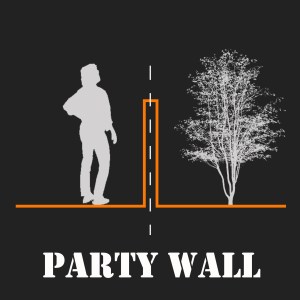
Party Wall Agreements
The Party Wall etc Act 1996 covers three different types of work:
- Works directly to a Party Wall, a Party Structure or a Party Fence Wall
- Excavations within 3m or 6m and to a depth lower than the adjoining owner’s (the neighbour’s) foundations
- New walls built up to, or astride, the line of junction
Many projects will therefore require a Party Wall Agreement with the neighbouring property owners. If required, The Party Wall Agreement process is a legal procedure that must be initiated before any construction works are carried out to your property.
MiL Architect’s do not advise on such matters. Depending on the nature of your project, you may need to appoint a Party Wall Surveyor to act on your behalf. The Party Wall Surveyor will consider your construction work from the perspective of your neighbour’s property.

Construction Design Management (CDM) Regulations
In April 2015, the government introduced new health and safety legislation meaning most domestic construction is now considered ‘notifiable.’ This means that the client, designers and contractor have duties under the Construction Design and Management Regulations (CDM).
The aim is to reduce accidents on site by eliminating or reducing risks during the design phase. Designers and contractors will also have to collate information for inclusion in the Health and Safety file which must be presented to the end user following completion of the works on site.
MiL Architects undertake continual professional development course and are a competent Principal Designer, whilst also ensuring that other parties are aware of their duties. Clients should make allowance for this service within their budget. Alternatively, they are free to appoint their own CDM Advsior. More information is available on the Health and Safety Executive website.

Asbestos
Asbestos is the term for a group of minerals made of microscopic fibres which was often used in buildings for insulation, flooring and roofing. Although now banned in the UK, buildings constructed before the year 2000 may still have asbestos in them. If the asbestos-containing materials inside these buildings remain intact, they pose very little risk.
However, if these materials are damaged or disturbed e.g. during construction, tiny asbestos fibres can be released into the air.
If your property is constructed pre-2000, it will be necessary to have an asbestos survey carried out. As a hazardous material, it will need to be identified and removed by a specialist firm before any construction commences on site.

Trees
If there are trees within the confines of your property, or also in the near vicinity, it will likely be necessary to have a tree survey carried out to determine if any proposed development may have a detrimental effect on them. Also, it is important to find out if any of the trees are protected. Protected trees include those covered by a Tree Preservation Order (TPO) or those in a conservation area. It will be necessary to contact your local planning authority to carry out any work on these trees e.g. pruning etc.

Right to light
A “right to light” is an easement that gives a landowner the “right to receive light” through defined apertures in buildings on his or her land, “where there has been enjoyment of the right claimed for 20 years without interruption, force, or permission.”
If a new building, or extension to an existing building, limits the amount of light coming in through a window on a neighbouring property which enjoys a right to light, and the level of light inside the neighbouring property falls below the accepted level, then this constitutes an obstruction. In this scenario, unless your neighbour waives their rights (possibly in return for financial gain), they are entitled to take legal action against you. It is important to appoint a Right to Light expert to carry out a survey and act on your behalf if you feel this may be a potential issue.
 MiL Architects
You must be logged in to post a comment.